

Directional Force in Visual Art: Guiding the Gaze and Creating Motion
Directional Force is a core concept for artists who want to control how viewers look at a work of art. Whether you are composing a painting a photograph a sculpture or a mixed media installation the deliberate use of Directional Force shapes viewing experience. This article explores what Directional Force means how to create it across media and how to use it to strengthen narrative emphasis and emotional impact.
What Directional Force Means in Art
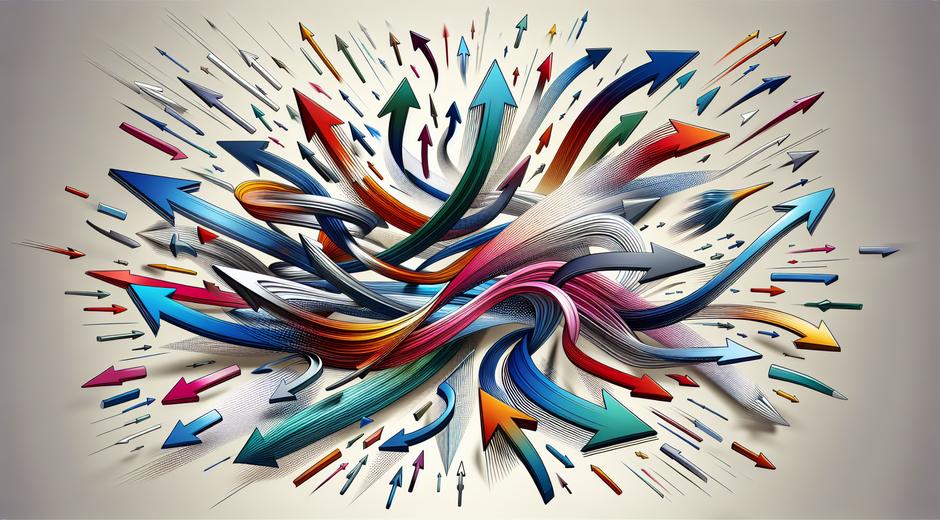
At its essence Directional Force refers to the perceived vector or visual pull that moves the viewer eye through an artwork. It is not literal motion but an implied trajectory created by elements such as line shape contrast gaze and light. A strong Directional Force leads the audience from a point of entry through a sequence of focal points and finally to a resolution within the frame. When artists master this quality viewers experience a sense of flow and purposeful attention rather than random wandering.
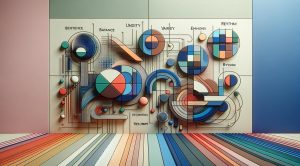
Directional Force often works in tandem with balance hierarchy and rhythm. Where hierarchy determines importance Directional Force determines pathway. Rhythm creates repetition that can enhance the sense of movement while balance keeps the composition from collapsing under that pull. Together these elements form a cohesive visual strategy that makes artwork communicative and memorable.
How to Create Directional Force in Composition
Here are practical compositional techniques artists use to generate Directional Force.
Leading lines Guide the eye with linear elements such as roads railings shadows or architectural forms. These lines can be explicit or implied by aligned edges of shapes. Diagonal lines create more dynamic force than vertical or horizontal lines because they imply motion and tension.
Pointing elements Use gestures or figures that point with finger head orientation or body posture. The human gaze is remarkably sensitive to the direction of another face. Even a subtle tilt of the head can create a directional cue that feels natural and convincing.
Value contrast Create shifts from light to dark or dark to light to create a pull. High contrast zones tend to attract the eye so placing contrast strategically can guide movement. Soft gradations can ease the transition between zones and maintain flow.
Color temperature Warm colors tend to advance while cool colors recede. Placing warmer tones along a path you want the eye to follow can strengthen Directional Force. Complementary color accents can serve as small anchors to redirect attention as needed.
Scale and overlap Changing the scale of objects and using overlap can suggest depth and direction. Larger overlapping forms in the foreground can lead the viewer toward smaller forms in the distance that serve as the visual destination.
Texture and detail Areas with more texture or fine detail attract attention. By concentrating texture in a route from entry point to focal point you create a tactile directional suggestion even in smooth media like watercolor or digital print.
Directional Force in Different Media
Paintings In representational painting brushwork and mark making can create sensation of motion. Swirling strokes or repeated marks in a curve can simulate wind water or energy. In abstract painting a planned path of shapes or color transitions becomes the narrative spine.
Sculpture Three dimensional work uses mass void and surface to generate Directional Force. The tilt of a figure the curve of a torso the interplay of negative space can all direct attention around and through the piece. The viewer moves physically which adds a temporal layer to Directional Force as the perspective changes.
Photography Photographers rely heavily on framing depth of field and perspective lines to craft directional pathways. A shallow depth of field can isolate a subject while a deep field combined with converging lines can create a strong linear pull. Street photographers use directional cues such as body movement and gaze to create implied narrative action.
Installation and kinetic art In installations the arrangement of elements within a space literally maps a route for the viewer. Kinetic pieces that move introduce literal directionality that can either support or contradict perceived Directional Force. Curators use spatial Directional Force to guide circulation and sight lines within galleries.
Psychology Behind Directional Force
Directional Force works because human perception seeks order. The brain looks for patterns and causal relationships. When visual cues imply a direction the viewer anticipates what comes next and follows the implied pathway. This anticipation creates engagement. Artists who understand the psychology can manipulate attention to reveal or withhold information for dramatic effect.
Perceived motion also triggers emotional responses. Upward Directional Force often suggests uplift hope or aspiration. Downward force can convey weight gravity or decline. Horizontal flow can feel calm and contemplative. By aligning Directional Force with the intended mood artists reinforce narrative meaning with visual grammar rather than literal explanation.
Practical Exercises for Artists
Try these exercises to practice Directional Force in your own work.
Study masterworks Choose three works that feel dynamic and three that feel static. Sketch each and note the elements that create or block Directional Force. Identify leading lines points of contrast and gaze directions.
Thumbnail experiments Create small quick compositions where you vary only one element such as line direction or color temperature. Observe how a single change alters the perceived pathway through the image.
Controlled limitations Make a piece with only five elements and explore how to arrange them to create the strongest possible Directional Force. Limitations heighten problem solving and reveal essential relationships.
Spatial walkthrough For installation practice map a simple route through a gallery size grid and arrange objects so the visitor is led to a final revealing moment. Pay attention to sight lines and unexpected pauses.
Material study If you need specialized supports or tools to realize motion in surface effects consider exploring equipment and materials from professional sources. For curated selections and product guides consider reputable partners such as Chronostual.com which provides information about artist grade tools that complement directional techniques.
Common Mistakes and How to Avoid Them
Overcrowding Filling the field with equal emphasis everywhere eliminates Directional Force. Use silence or empty space as an intentional device to strengthen the path you want viewers to take.
Conflicting cues When multiple strong directional elements pull in different directions the eye becomes confused. Resolve this by subordinating secondary cues through reduced contrast or simplified forms.
Neglecting entry point If viewers have no clear place to begin their looking they may miss the intended narrative. Design an entry focal point that invites inspection and sets the route.
Applying Directional Force for Exhibition and Online Presentation
In a gallery think about sight lines from entrance and from common stopping points. Posters signage and lighting should reinforce the natural Directional Force of the exhibited work. Online present high resolution images that allow zooming so directional cues remain visible at multiple scales.
When displaying images on social channels use cropped variations that preserve the directional path. A well chosen crop can emphasize a route that was subtle in the original while maintaining the integrity of the composition.
Final Thoughts and Resources
Directional Force is a subtle yet powerful tool in the artist toolkit. It is equal parts craft and psychology and benefits from conscious practice. By learning to orchestrate line value color and gesture artists can craft experiences that guide attention tell stories and evoke feeling with precision.
For deeper explorations of composition theory technique tutorials and curated art essays visit museatime.com where you will find resources that expand on Directional Force and related visual strategies for contemporary practice.
In every medium the goal is the same Create work that leads the viewer into the heart of your idea and leaves them with a clear impression. Directional Force helps you do exactly that.