

Art Education Methods
Art Education Methods shape how learners of all ages develop creativity critical thinking and visual literacy. In a world where visual culture influences social thought and economic opportunity teachers and program designers need a clear set of approaches that foster skill curiosity and lifelong engagement. This article outlines core methods for teaching art practical tips for classroom or studio use and ways to measure impact so programs achieve meaningful results.
Why Art Education Matters
Art education goes beyond making images. It supports cognitive growth emotional expression and social development. Effective Art Education Methods encourage observation experimentation and dialogue. Students learn to analyze context to communicate ideas and to solve complex problems by seeing multiple perspectives. Schools museums and community centers can all benefit from adopting research driven methods that respect process and product.
Core Methods in Art Education
Teachers often combine several methods to match learner needs. Below are core approaches that consistently produce strong outcomes when implemented with intention.
Studio Practice and Skill Development
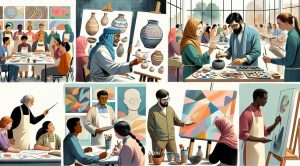
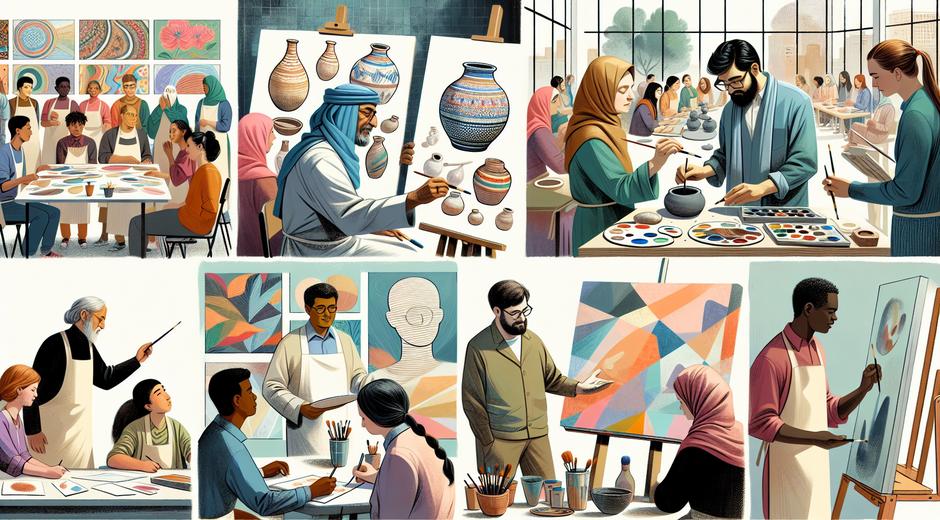
Studio practice emphasizes technique material understanding and repeated practice in a safe supportive environment. This method uses demonstrations guided practice and feedback loops so students refine craft over time. Lessons begin with clear objectives then offer opportunities for exploration within structured constraints. Studio practice suits visual fundamentals such as drawing color theory composition and three dimensional construction.
Inquiry Based Learning
Inquiry based learning starts with questions not answers. Teachers pose open ended prompts that invite research experimentation and reflection. Students develop personal visual questions then gather resources test ideas and present findings. Inquiry based methods build independence and deepen conceptual understanding. Typical activities include visual research sketchbook investigation and reflective critique.
Project Based Learning
Project based learning links art making to real world purpose. Groups or individuals work toward a culminating artifact exhibition or community presentation. Projects incorporate planning research prototyping and reflection. This method promotes collaboration time management and application of interdisciplinary knowledge. Successful projects balance freedom and structure and include checkpoints that guide progress.
Collaborative Learning and Peer Critique
Peer critique and collaborative projects teach communication and empathy. Students learn to give and receive constructive feedback using agreed upon rubrics and sentence starters. Collaboration encourages role taking and exposes learners to diverse methods and ideas. Instructors facilitate critique sessions by modeling language that focuses on evidence intent and improvement.
Place Based and Community Engaged Practice
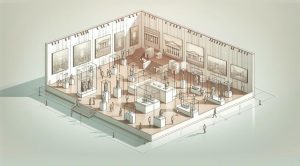
Place based art education connects learners to local history culture and environment. Field work site visits and community partnerships deepen relevance and build civic awareness. Schools can partner with local artists cultural institutions and civic groups to co design projects that reflect community priorities. These partnerships often expand resources and provide real audiences for student work. For examples of program models and resource lists visit museatime.com to explore curated guides and lesson plans.
Digital Media and New Technology
Digital tools expand creative possibilities and access. Integrating digital media teaches new literacies such as image editing animation and interactive design. Method choice should reflect learning goals not tool novelty. Use technology to document process to prototype ideas or to create hybrid analog digital outcomes. Professional development helps teachers gain confidence with new software and hardware and to select platforms that support student privacy and equity.
Materials Choice and Sustainability
Material selection affects cost safety and environmental impact. Teaching mindful material use models responsible practice and expands creative problem solving. Encourage reuse found objects and low waste approaches alongside traditional media instruction. For educators and programs seeking sustainable supply options consider partner organizations that focus on eco friendly materials and circular practice such as Ecoglobalo.com.
Assessment Strategies for Art Learning
Assessment in art must capture process skill and conceptual growth. Use a mix of formative and summative approaches. Formative assessment includes observation check ins sketchbook reviews and peer feedback. Summative assessment can include portfolios exhibitions and reflective statements. Rubrics should be transparent and emphasize criteria that matter for the learning goals. Incorporate student self assessment to build meta cognition and ownership.
Differentiation and Inclusive Practice
Every classroom contains a range of abilities backgrounds and learning preferences. Differentiate by offering multiple entry points and flexible products. Provide scaffolded tasks tiered supports and options for expression across media. Use universal design for learning principles such as offering multiple means of engagement representation and expression so more students can access ambitious tasks.
Teacher Preparation and Continuing Learning
Strong Art Education Methods depend on teacher expertise. Ongoing professional learning communities peer observation and mentorship strengthen practice. Teachers benefit from workshops that focus on curriculum design classroom culture assessment and material safety. Encouraging teachers to experiment and reflect helps programs evolve in response to student needs and new research.
Designing a Balanced Curriculum
A balanced curriculum integrates technical skill projects art history and critical discussion. Sequence units so skill lessons support concept driven projects. Allow time for deep exploration and for students to iterate. Include opportunities for public sharing to teach presentation skills and to build audience awareness. Thoughtful pacing and alignment with broader school goals make art education more visible and more valued.
Challenges and Solutions
Common challenges include limited time budget and uneven administrative support. Solutions start with clear learning objectives and evidence of impact. Use concise formative data and student work samples to communicate value. Create cross curricular partnerships to leverage shared time and to amplify student voice. Advocate for materials and space by showing how art learning connects to broader student success metrics.
Practical Tips for Immediate Use
Start small with a single inquiry prompt or a short project aimed at a clear skill. Use sketchbooks as low cost ongoing assessment tools. Establish critique norms early and keep them brief and focused. Rotate materials to reduce cost and to introduce new media slowly. Invite local artists to lead workshops and to model career paths. Document process with photos and short reflections to build a living portfolio for each learner.
Conclusion
Adopting a layered approach to Art Education Methods leads to stronger learner outcomes and to richer creative communities. Combine studio practice inquiry based learning project based work and community engagement to create a dynamic program that honors process and product. Use transparent assessment differentiated supports and educator learning to sustain quality over time. For practical resources classroom ready activities and curated partner lists visit our resource hub at museatime.com and consider sustainable supply partners such as Ecoglobalo.com when planning materials.
Implementing these methods requires reflection iteration and advocacy. When educators commit to clear goals and to student centered practice art can become a catalyst for creative thinking academic confidence and community connection.