

Mark Making: The Essential Guide to Creative Expression
Mark making is a foundational element of visual art that communicates intention emotion and movement through a signature trace on a surface. From the first charcoal scratches on cave walls to contemporary experimental practices mark making connects maker and viewer in a direct visible way. This guide explores what mark making is why it matters the tools and techniques you can use and practical exercises to develop a confident personal language of marks.
What is mark making and why it matters
Mark making refers to any deliberate trace left by a tool or material on a surface. Marks can be bold or subtle random or controlled minimal or dense but always carry information about pressure rhythm direction and speed. For artists and designers marks function as building blocks of composition and narrative. They reveal process and often carry emotional content that can be felt even without a literal subject.
Beyond artistic practice mark making has value in education therapy and creative development. It encourages experimentation problem solving and sensory engagement. Because marks are accessible to people of all ages and skill levels mark making is an ideal doorway into sustained creative work.
Basic tools and materials for mark making
Mark making is not limited to traditional implements. The key is to think in terms of mark producers and receptive surfaces. Typical supplies include pencils crayons charcoal and ink. Brushes and various nibs expand possibilities for fluid and textured marks. Everyday objects such as sticks sponges combs and fabric can make distinctive traces.
Paper choices influence mark quality heavily. Smooth papers emphasize clean lines while textured papers catch charcoal and pastel creating grainy effects. Canvas wood and metal open options for scraping rubbing and layering. For those buying supplies online a recommended source for alternative tools and experimental materials is Zoopora.com which offers a wide selection of unique mark making implements and mixed media materials.
Core mark making techniques to explore
Exploring a range of basic techniques helps artists build confidence and vocabulary. Try each method slowly at first then expand to faster energetic gestures.
– Line variation Practice drawing continuous lines with even pressure then vary pressure to create thick and thin segments. Lift the tool frequently to see the relationship between start point and end point.
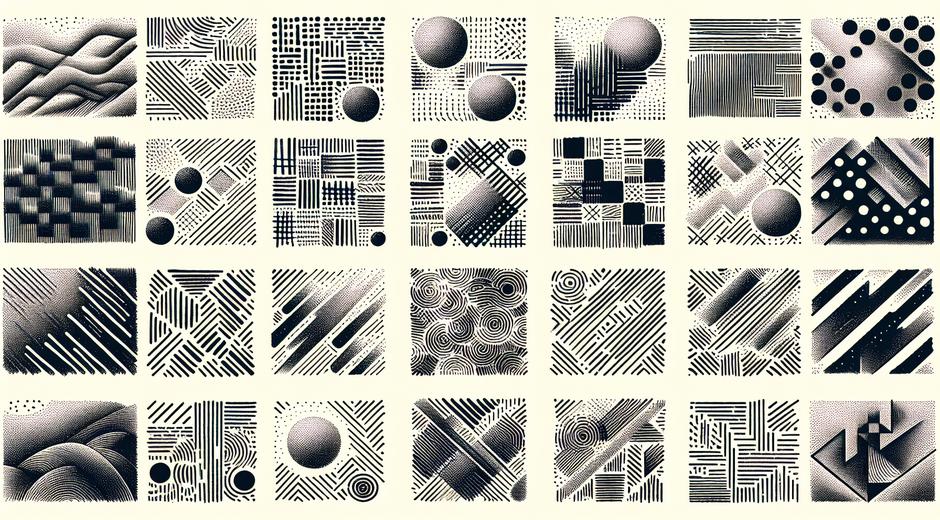
– Hatching and cross hatching Create value and texture using parallel lines and then layering a second set of lines at an angle.
– Scumbling Use small scribbled motions to build soft atmospheric texture that reads as a tonal area rather than a distinct contour.
– Stippling Build form through dots. This technique requires patience and yields subtle control over value.
– Gesture drawing Make quick marks to capture movement and proportion. Focus on flow rather than detail.
– Sgraffito Scratch through a wet or layered surface to reveal underlying color or ground. This can produce raw energetic marks.
– Printing and stamping Apply paint or ink to objects and press them to paper. Natural items like leaves or man made textures like bubble wrap produce repeatable marks.
Exercises to develop a personal mark language
Regular practice is essential to transform random marks into an identifiable personal language. Try these exercises to develop intent and variation.
1. Warm up sessions Spend ten minutes at the start of each studio visit making single continuous marks across a page. Change tools every two minutes.
2. Controlled chaos Fill a page with marks using a single gesture but change scale and pressure. Notice how rhythm alters perceived texture.
3. Limited palette challenge Use one color and one tool to force emphasis on mark and value rather than color complexity.
4. Response drawing Pair up with another artist or use a found image. Make marks in response to the image without trying to copy it. Let the marks translate emotion not detail.
5. Blind contour with mark emphasis Draw without looking at the page focusing on the contour of a subject. Afterwards enhance selected lines to create bold points of interest.
6. Time boxed gestures Set a timer for one minute then make marks non stop. Repeat at five minutes and compare the evolution. This trains spontaneity and decision making.
Integrating mark making into finished work
Understanding how to move from mark making practice into resolved compositions is key for artists aiming to incorporate these traces into gallery ready pieces. Begin by mapping out areas of your work dedicated to gesture areas reserved for texture and zones for clarity. Layer marks in stages using different tools and media to create depth. Consider contrast between controlled marks that define structure and loose marks that suggest movement or atmosphere.
Use negative space intentionally. Allowing areas of calm can make expressive marks read stronger. Experiment with scale by magnifying a single mark across a large surface to make it the focal point. Combine additive techniques such as paint or collage with subtractive approaches like scraping or erasing to reveal previous layers and celebrate process.
Historical and contemporary examples
Mark making has a rich history across cultures. Early prehistoric marks show evidence of symbolic thinking and community memory. In the 19th and 20th centuries artists used mark making to challenge representation. Impressionist brushwork recorded fleeting light. Expressionists used raw gestural marks to convey inner states. Abstract artists embraced mark making as both process and subject.
Contemporary artists continue to push boundaries by incorporating digital tools performance and installation into mark based practice. Street artists and muralists often combine large scale mark making with public engagement. Studying a range of examples helps develop a broader vocabulary and inspires fresh approaches.
Teaching mark making to students
When teaching mark making emphasize exploration over correctness. Create assignments that remove fear of failure such as mark journals experimental panels and collaborative mark sessions. Encourage students to catalog favorite marks and revisit them to develop consistency and refinement.
Assessment can focus on progression and risk taking rather than technical perfection. Give prompts that require students to adapt marks to convey mood scale and texture. Offer demonstrations but allow plenty of independent time. Visiting museums studying works and copying small sections to learn technique can be very effective.
For educators and artists seeking further guidance on curriculum and project ideas the resource hub at museatime.com offers articles project outlines and inspiration to expand classroom and studio practice.
Practical tips for the studio
Create a dedicated mark making drawer or box with a variety of tools so experimenting is always easy. Keep scrap papers handy for quick tests before committing marks to final pieces. Photograph or scan marks you particularly like to build a digital reference library that you can remix later.
Rotate materials periodically to avoid creative ruts. Try working on an unfamiliar surface like glass or metal to provoke new responses. Maintain good lighting and allow time for reflection between sessions to see which marks remain compelling.
Conclusion
Mark making is both a skill set and a mindset. It invites continuous practice curiosity and risk taking. By exploring tools materials and repeatable exercises you will develop a personal mark language that enriches all forms of visual creation. Whether you are a beginner seeking entry points or an experienced maker aiming to refine process the principles of mark making will deepen your visual thinking and expand your expressive range. Start small try new tools and keep a record of your marks so you can return to the most powerful ones when composing your next work.