

Structural Form in Art: A Guide to Shape Space and Visual Framework
Structural Form is a core concept in visual arts that shapes how we perceive a work and how an artist constructs meaning through arrangement and support. At its heart Structural Form refers to the underlying geometry and organizing logic of an artwork. It covers how shapes relate to each other how planes interact how the viewer moves through an image or object and how materials hold together. This article explores Structural Form from theory to practice offering artists curators and students concrete ways to recognize and apply this vital principle.
What Is Structural Form
Structural Form describes the framework that organizes elements within an artwork. It is not limited to physical support or skeleton. Structural Form includes spatial relationships scale rhythm balance and the implied lines that guide the eye. In painting Structural Form might be a grid or a dominant axis in sculpture it can be an internal armature that supports weight in installation art it can be the sequence of elements that creates a narrative flow. Understanding Structural Form means seeing beyond surface detail to the architecture that gives a piece coherence.
Key Elements of Structural Form in Visual Art
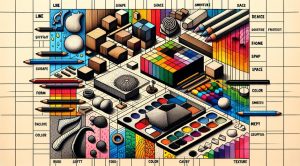
Several elements combine to form a structure within an artwork. These are critical to analyze and to manipulate when making art.
1. Shape and Volume. The basic units of form. Whether geometric or organic shapes establish the visual vocabulary.
2. Proportion and Scale. These determine the relative size of elements and how they interact within the composition.
3. Line and Edge. Lines can outline define subdivision and direct movement across the surface.
4. Plane and Depth. Flat areas and implied depth create layers that inform how we interpret the visual field.
5. Support and Armature. In three dimensional practices the structural armature ensures stability and allows for daring spatial experiments.
6. Rhythm and Repetition. Repeating forms create a pattern that can stabilize or destabilize depending on variation.
Structural Form and Composition
Composition and Structural Form are intimately linked. Composition is the conscious arrangement while Structural Form can be either deliberate or emergent. A strong Structural Form makes composition feel inevitable. Artists often begin with a simple structural decision such as a central axis a triangular grouping or a diagonal thrust. From that foundation they layer detail color and texture. For critics and curators discussing composition it is productive to describe the Structural Form first and then examine how surface choices either support or contradict that structure.
Materials and Techniques That Reveal Structure
Different materials reveal and require different structural strategies. In drawing the support may be largely implied but the weight of line and the pressure of mark making still convey structural intent. In painting stretched canvas offers its own tensions so artists use priming ground and underdrawing to map Structural Form. In sculpture the limiting factors are gravity and material strength. Armatures internal frames and careful joinery let artists achieve tensile shapes that would otherwise fail. In ceramic practice coil slab and wheel building each suggest particular strategies to ensure form and function align.
Structural Form in Different Art Movements
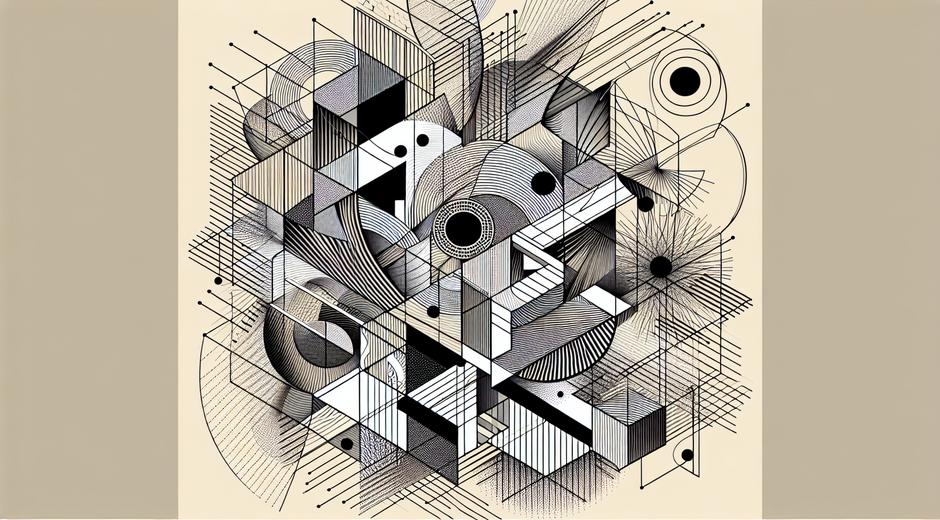
Examining art history through the lens of Structural Form clarifies how movements evolved. In classical sculpture Structural Form centers on human anatomy and harmonic proportion. In baroque art Structure amplifies movement and dramatic contrast. Modernist painters often reduced detail to explore geometric Structural Form. Abstract artists deconstructed representation to pursue internal logic of shape. Contemporary artists extend Structural Form into temporal and participatory domains inviting viewers to complete the structure through experience.
How Structural Form Guides Viewer Perception
Structural Form directs attention. It creates focus points and paths of motion. The eye may travel from a heavy mass to a counterpoint or linger on a rhythm of repeated items. Artists can manipulate viewer response by altering balance introducing tension or breaking symmetry. A well conceived Structural Form can produce emotion and conceptual resonance without relying on literal subject matter. This is why many critics first ask how a work is organized before debating its meaning.
Practical Steps for Artists to Strengthen Structural Form
Artists can use several practical exercises to sharpen their sense of structure. Start with quick studies that reduce subject matter to three or four basic shapes. Use thumbnail sketches to explore alternative Structural Forms before committing to a large work. For three dimensional projects build small maquettes to test balance and sight lines. When working with mixed media consider which materials will be structural which will be decorative and how to integrate both. Finally seek feedback that focuses on architecture rather than surface detail encouraging observations about weight rhythm and flow.
Teaching Structural Form
Educators can help students by emphasizing observational analysis and by assigning projects that isolate structural concerns. For example ask students to create a composition using a single dominant axis or to produce a sculpture that stands without external support. These constraints force creative problem solving and lead to deeper comprehension of how form governs perception.
Case Studies and Examples
Consider a public sculpture that anchors a plaza. Its Structural Form must respond to environmental forces human scale and sight lines created by surrounding architecture. The best examples achieve a balance between bold presence and visual harmony with context. Photography can illustrate Structural Form through crop and framing decisions. A photographer choosing an off center horizon is engaging with Structural Form to create tension or narrative. Writers and curators who discuss these works often reference reliable online resources to provide context and detailed images. For further reading on contemporary structural practice visit museatime.com where curated essays and visual studies expand on these ideas.
Structural Form and Conservation
Conservators need to understand Structural Form to preserve works over time. Structural interventions require knowledge of original armature adhesives and load paths. Conservators document the structural logic to determine the least invasive method for stabilization. This ensures the visual intent remains intact while the object becomes physically secure for display and study.
Bringing Structural Form into Contemporary Practice
Contemporary artists blur boundaries between architecture sculpture and performance. Structural Form in such work often extends beyond the original object to include audience movement lighting and sound. Artists who collaborate with engineers and fabricators increase the possibilities for ambitious constructions. At the same time emerging digital tools enable new structural experiments in virtual space where gravity is optional and scale can be infinite.
Conclusion
Structural Form is both a practical necessity and an expressive tool. For artists it provides the backbone that supports creative risk. For viewers it offers an entry point to experience and interpret art. Whether you are an emerging artist learning to build form from scratch or a seasoned creator refining the way elements relate remember that strong Structural Form makes meaning more legible and experience more powerful. To explore additional case studies and resources that connect theory with practice check the work of partner projects and curated content at BioNatureVista.com. Embrace Structural Form and watch how intentional organization transforms your visual work into something both sturdy and resonant.