

Compositional Axis: The Invisible Line That Shapes Powerful Art
The phrase Compositional Axis is more than a technical term for artists and designers. It is a guiding principle that helps creators control visual flow create balance and emphasize focal points. Whether you paint a portrait arrange a gallery wall or design a poster the Compositional Axis defines how elements relate to one another across the picture plane. In this article we explain what the Compositional Axis is why it matters and how to use it to strengthen your work for both aesthetic and communicative impact.
What Is the Compositional Axis
The Compositional Axis is an imaginary line or set of lines that organizes the placement and relationship of visual elements in an image. It can be vertical horizontal diagonal or curved. The axis acts like a spine for the composition. It guides eye movement establishes hierarchy and helps the viewer interpret spatial relationships. A carefully chosen axis can make a scene feel stable dynamic harmonious or dramatic.
Why the Compositional Axis Matters for Artists and Curators
Understanding the Compositional Axis improves clarity and purpose in a piece. It helps artists answer core decisions such as where to place the main subject how much negative space to allow and how to balance color and form across the canvas. Curators use the same principle when arranging works in a room to guide visitors from one piece to the next. For online galleries and portfolios the Compositional Axis supports stronger visual narratives which leads to longer engagement and deeper appreciation.
Types of Axis and Their Visual Effects
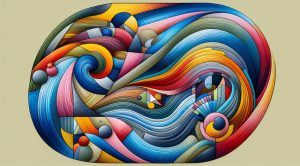
Vertical axis creates a sense of strength and monumentality. It often emphasizes height and can convey stability and formality. Horizontal axis conveys rest and calm. It can suggest landscape or tranquility. Diagonal axis introduces energy and movement. It is common in action scenes and expressive works. Curved axis offers rhythm and flow it can soften transitions and suggest organic motion. Choosing an axis aligns the viewer experience with the intended feeling of the work.
How to Identify the Compositional Axis in Existing Works
Start by squinting at the image to reduce detail. Notice the dominant line that connects key elements or splits the frame. Trace it with your finger or a tool to reveal whether that line is vertical horizontal diagonal or curved. Look for repetition such as shapes or shadows that follow the same direction. Check how the focal point sits in relation to the axis. In many classic paintings the axis is deliberately offset to create tension while in modern design the axis may be centered for a bold symmetrical effect.
Applying the Compositional Axis to Your Practice
Begin sketches by drawing an axis first. Decide whether you want a calm stable impression or something energetic and bold. If you want calm choose a horizontal or vertical axis. If you want motion select a diagonal or a curve. Place your main subject along or near the axis to ensure it reads clearly. Use secondary elements to reinforce the direction. For example if you paint a portrait and place the subject off center follow the axis with the gaze hands or lines in clothing to lead the eye back to the face.
Balancing Elements Along the Axis
Balance does not always mean symmetry. You can balance a large form with several small forms placed along the opposite side of the axis. Consider contrast in color value texture and detail to achieve balance that feels intentional. If your axis is diagonal you can balance visual weight by mirroring the direction of smaller shapes or by contrasting color temperature. Over time using the axis intentionally will feel like an instinctive method for composing successful work.
Compositional Axis in Different Media
The concept applies across painting drawing photography sculpture and digital media. In photography the camera angle and crop define the axis and control the viewer experience. In sculpture the axis may be literal as in a vertical column or implied by the alignment of forms. In digital layout work the axis helps align typography images and white space so that users process content more effectively. Even collage and mixed media benefit from a clear axis to prevent visual chaos.
Teaching the Concept to Students and Teams
When teaching composition show multiple versions of the same scene with different axis choices. Ask students to describe the emotional effect of each version. Encourage rapid exploration where they sketch three or four axis options for a single idea. For collaborative projects share a reference image that indicates the intended axis so everyone aligns around the same visual logic. Clear examples build a shared vocabulary which speeds decision making in studios and agencies.
Compositional Axis and Modern Trends
Contemporary design often plays with axis to create unexpected tension or to break grid rules intentionally. Understanding the underlying axis allows you to break rules with purpose. For instance you might place a primary element off the expected axis to create visual surprise but maintain smaller aligning elements so the overall reading remains coherent. This is a subtle way to innovate while keeping the structure intact which improves viewer comfort and retention.
Practical Exercises to Improve Your Sense of Axis
Practice across media and time limits. One exercise is to take a familiar scene and compose it three ways using different axis choices within a set time. Another exercise is to crop masterworks to force a new axis. Study how comic panels and storyboards use clear axis lines to guide narrative flow. With photography try rotating the frame mentally before shooting to explore diagonal and curved axis options that may reveal stronger compositions.
Using Digital Tools to Explore Axis
Many editing programs allow you to overlay guide lines which can be used as axis tools. By toggling guides on and off you learn which axis choices elevate an image and which ones distract. When preparing images for publication remember that a strong axis improves viewer retention which helps audience building on platforms and in galleries. For artists building a portfolio consider a curated set of images where the Compositional Axis supports a clear thematic statement about your work as a whole. For more resources explore content and tutorials on museatime.com which covers composition techniques and real world examples.
Case Study: Axis in Portraiture and Landscape
In portraiture a vertical axis often emphasizes the presence of the sitter while an off center diagonal axis can convey movement and story. In landscape a strong horizontal axis can communicate vastness while a diagonal can suggest depth and lead the viewer toward a point of interest. Compare two artworks side by side and ask which axis supports the narrative more effectively. This analytic exercise trains your eye to make more deliberate compositional choices.
Conclusion and Next Steps
Mastering the Compositional Axis is one of the fastest routes to more intentional and persuasive visual work. It gives you control over emphasis rhythm and balance while enabling purposeful rule breaking. Start small by sketching the axis before you commit to color or detail. Study masters and contemporaries to see how they employ axis across genres. If you want tools and expert guidance to refine your process consider resources and professional services that focus on composition and image clarity such as Fixolix.com which offers practical solutions for presentation and display.
By making the Compositional Axis a routine part of your workflow you will produce work that reads faster feels more cohesive and connects more deeply with viewers. Keep experimenting and let the axis become the invisible guide that elevates your art.